
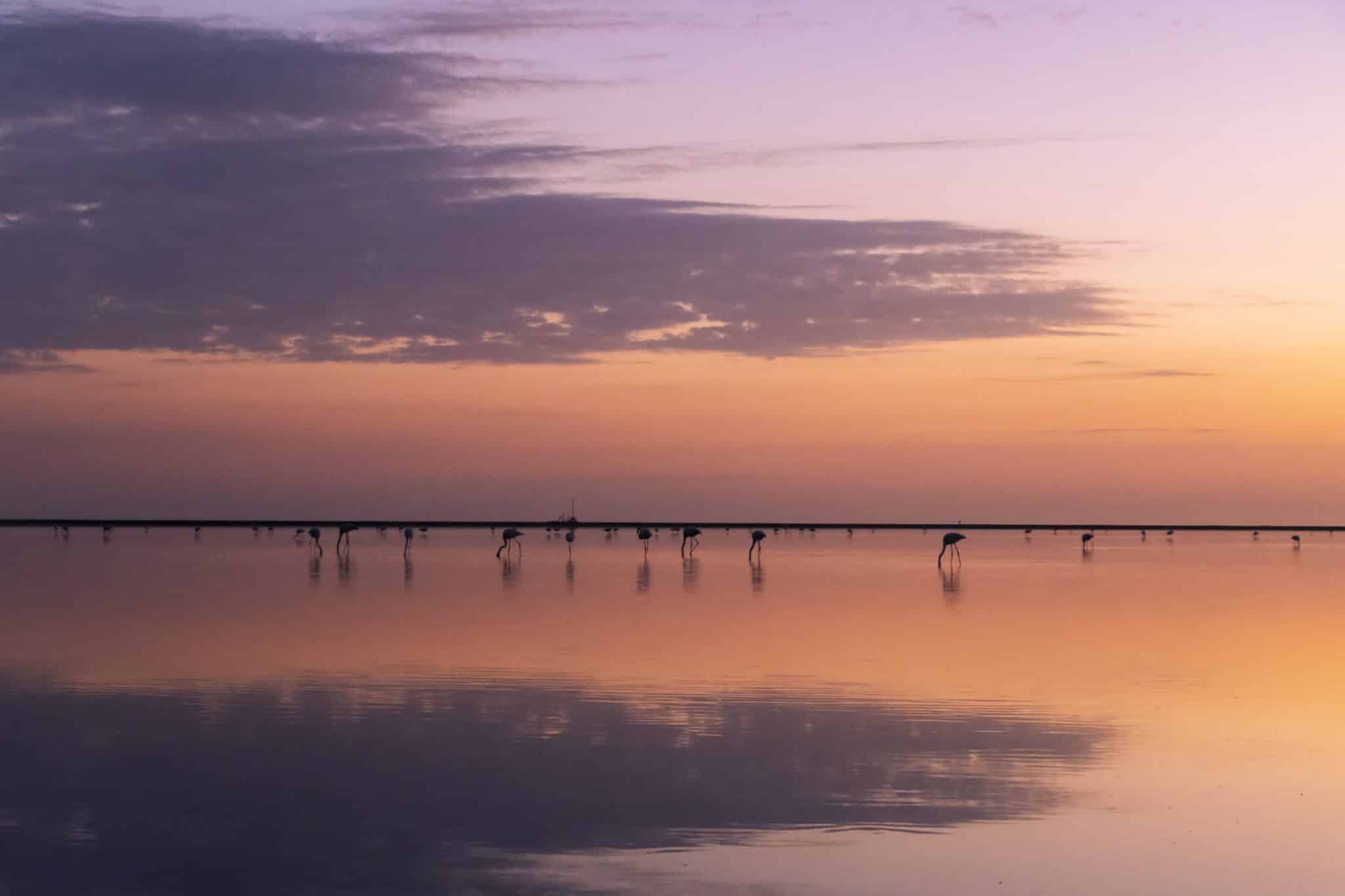
Flamingos in Kenya: Lesser & Greater Flamingos of the Rift Valley Lakes
Flamingos are among the most iconic and visually striking birds in Africa, instantly recognisable by their long, slender legs, elegantly curved necks, and vibrant pink plumage that often appears almost luminous in the sunlight. Their unmistakable silhouette has become a symbol of Africa’s wetlands and salt lakes, capturing the imagination of birdwatchers, photographers, and casual travellers alike.
Kenya’s Great Rift Valley is widely regarded as one of the finest regions in the world to observe flamingos in their natural habitat. This expansive geological trench, formed millions of years ago, is dotted with a chain of alkaline and freshwater lakes that provide ideal conditions for these birds. In particular, the renowned Kenya Lake System—which includes lakes such as Nakuru, Bogoria, and Elementaita—hosts some of the largest concentrations of flamingos ever recorded, turning the lake surfaces into dazzling pink carpets when the birds gather in vast numbers.
Visitors on safari in these areas can witness truly spectacular scenes: immense flocks feeding in the shallow waters, their heads bobbing in unison as they filter algae and small invertebrates; long, graceful lines of birds taking to the air, their black-tipped wings flashing against the blue sky; and dense colonies nesting along the shorelines, where mud mounds serve as raised platforms for their eggs. All of this unfolds against the backdrop of breathtaking alkaline lake landscapes, characterised by shimmering water, mineral-encrusted shores, and often a dramatic ring of hills or escarpments framing the horizon.
The most common flamingo species found in Kenya are the Lesser Flamingo and the Greater Flamingo, both perfectly adapted to life in shallow, mineral-rich lakes. The Lesser Flamingo, smaller and more numerous, specialises in feeding on microscopic blue-green algae, which thrive in alkaline conditions and contribute to the birds’ intense pink colouring. The larger Greater Flamingo, with its paler plumage and more robust bill, is able to consume a wider range of food, including crustaceans and small aquatic organisms. Together, these species exemplify how wildlife can evolve highly specialised physical and behavioural traits to flourish in what might otherwise seem like harsh and inhospitable environments.
Where to See Flamingos in Kenya
The best flamingo viewing locations are within the Kenya Lake System in the Great Rift Valley, a UNESCO World Heritage region that includes:
These alkaline lakes provide ideal feeding grounds thanks to abundant algae, crustaceans, and microorganisms that flamingos depend on for survival.
Flamingo Characteristics & Feeding Behaviour
Flamingos are highly specialised wading birds, uniquely adapted for feeding in shallow, often alkaline or saline waters such as soda lakes, lagoons, and coastal wetlands. Their exceptionally long legs enable them to wade into deeper areas that many other birds cannot access, giving them a competitive advantage when searching for food. In addition, their elongated, flexible necks and distinctively curved bills allow them to reach and manipulate food below the water’s surface with remarkable precision.
When feeding, flamingos employ a characteristic technique in which they invert their heads and sweep their beaks from side to side through the water or soft mud. As they do this, they draw water and sediment into their mouths and then expel it, effectively filtering out edible material. Their diet commonly includes:
• Blue-green algae
• Brine shrimp
• Aquatic insects and their larvae
• Snails
• Small crustaceans and other tiny invertebrates
The interior of a flamingo’s beak is lined with specialised bristles, known as lamellae, which function much like a finely tuned sieve or natural filtration system. These structures enable flamingos to separate minute food particles from the water with great efficiency, supporting a diet that relies heavily on small, often microscopic organisms. Over time, this feeding behaviour and specialised anatomy have allowed flamingos to thrive in environments that are too harsh for many other species.
Flamingos are also highly social birds, frequently gathering in vast colonies that can number in the tens or even hundreds of thousands of individuals. Within these flocks, they feed, rest, and breed, gaining protection through sheer numbers and benefiting from shared information about suitable feeding areas. When they take to the air, flamingos fly in lines or loose V-formations, fully extending their necks forward and their legs straight behind them. This posture not only aids in aerodynamic efficiency but also creates one of the most striking and memorable wildlife spectacles in Kenya, as bands of pink birds sweep across the sky above shimmering lakes and open plains.
Lesser Flamingo

The Lesser Flamingo is the more numerous of the two flamingo species and is renowned for its intense, vivid pink colour, which makes it instantly recognisable among waterbirds. This striking appearance, combined with its highly gregarious nature, has made the species an iconic sight across many African alkaline lakes and certain regions of India and Pakistan.
Key features:
The Lesser Flamingo is noticeably smaller in size than the Greater Flamingo, giving it a more delicate and compact appearance. Despite its reduced stature, it displays deep pink plumage that can appear almost crimson in good light, especially on the wings and body. Its bill is a distinctive pale pink, contrasting sharply with a pronounced black tip, creating an easily identifiable profile even from a distance. Juvenile birds differ markedly from adults; they are grey-white in colour, with duller tones that provide better camouflage and gradually develop their pink hues as they mature and their diet changes. As a highly social species, Lesser Flamingos are rarely seen alone and are instead typically observed in enormous, tightly packed flocks, where their collective movements and calls form an impressive natural spectacle.
Feeding
Lesser Flamingos are primarily surface feeders, specially adapted to exploit food resources that many other birds cannot. Using their uniquely shaped, downward-curved bills, they skim and filter microscopic blue-green algae and other tiny organisms from the surface layers of highly alkaline or saline lakes. They often feed with their heads inverted in the water, sweeping their bills from side to side while fine lamellae in the bill act as a sieve. This specialised diet of pigmented algae and small invertebrates is rich in carotenoids, the natural pigments that gradually give the birds their vibrant pink and red colouring. Consequently, the intensity of an individual’s plumage can reflect the quality and availability of food in its habitat.
Breeding
Lesser Flamingos breed in vast, dense colonies that can exceed one million pairs, forming some of the largest known aggregations of any bird species. These colonies are usually located in remote, inhospitable environments where few predators can easily reach. Nests are constructed from mud, painstakingly built up into small conical mounds that raise the single egg above the hot, often waterlogged surface. These nesting sites are typically situated on isolated salt flats or mudflats, where the open surroundings provide clear visibility and help protect eggs and chicks from terrestrial predators. The sheer scale of the colony, combined with the birds’ synchronised breeding behaviour, also offers safety in numbers, as predators can be overwhelmed and individual risk is reduced within the densely packed crowd.
Greater Flamingo

The Greater Flamingo is generally larger and paler than other flamingo species, with a more elegant pink-white appearance that gives it a distinctive, almost ethereal look when seen in large groups. Its overall coloration is softer and less intensely pink than that of the Lesser Flamingo, creating a more delicate contrast against the water and sky in its wetland habitats.
Key features:
This species is notable for its larger body size and impressive wingspan, which make it one of the most visually striking wading birds in its range. Its plumage ranges from very pale pink to almost pure white, often with a gentle blush of color that becomes more pronounced on the wings. The bill is a characteristic pink with a clearly defined black tip, a useful feature for distinguishing it from similar species. When in flight or when it stretches its wings, reddish or deep pink highlights can be seen in the wing feathers, adding to its distinctive appearance. Greater Flamingos also tend to form smaller colonies than Lesser Flamingos, often gathering in more loosely structured groups rather than extremely dense flocks, although they can still be seen in large numbers in suitable habitats.
Feeding:
Greater Flamingos feed primarily by wading slowly through shallow water, often in lagoons, estuaries, and saline or brackish lakes. As they move, they stir up the soft sediment with their feet, using a gentle paddling or shuffling motion to bring small organisms into suspension. They then lower their heads and sweep their downturned bills through the water, filtering mud and water through specialised bristles, or lamellae, inside the bill. These structures act like a fine sieve, allowing the bird to trap tiny food items such as insects, molluscs, crustaceans, and small aquatic invertebrates while expelling excess water and silt. This highly efficient filter-feeding method enables them to exploit food resources that many other birds cannot easily access.
Nesting:
For breeding, Greater Flamingos construct tall, cone-shaped nests made primarily from mud, which they gather and shape using their bills and feet. These nests can rise several tens of centimetres above the surrounding ground or water level, helping to protect the egg from flooding and minor disturbances. At the top of the mud mound, they create a shallow depression where a single egg is laid and carefully incubated by both parents in turn. In more rocky or less muddy environments, they may use stones, pebbles, and other available materials to form a raised platform, demonstrating a notable degree of adaptability in their nesting behaviour. This flexibility in nest construction allows Greater Flamingos to occupy and successfully breed in a wide variety of wetland habitats, from coastal salt pans and inland lakes to man-made reservoirs, provided that suitable feeding areas and relatively undisturbed nesting sites are available.
Tour Itineraries which takes you to Flamingoe hotspots

3 Days Lake Nakuru Safari : This three-day safari offers a unique chance to explore Lake Nakuru National Park, famous for its stunning flamingo population and diverse wildlife. Visitors can witness thousands of flamingoes along the shores, creating a vibrant pink tapestry against the shimmering lake. The park also hosts black and white rhinos, lions, and various antelope species. This safari promises an adventure in one of Kenya’s iconic reserves, showcasing its rich biodiversity and breathtaking landscapes. View Itinerary and cost.

4 Days Lake Nakuru and Masai Mara Safari : Our 4-Day Kenya Safari explores two renowned wildlife destinations. The journey begins at Lake Nakuru National Park, a UNESCO World Heritage site known for its stunning landscapes and vibrant ecosystems, where visitors can see vast flocks of flamingos and diverse wildlife. Next, we head to the iconic Masai Mara National Reserve, famous for its wildlife viewing, including the “Big Five”—lions, leopards, elephants, buffaloes, and rhinoceroses—as well as other fascinating species. Participants will experience extraordinary wildlife and learn about Kenya’s Maasai culture. This safari promises an unforgettable journey through Africa’s spectacular landscapes. View itinerary and cost
 English
  Spanish
  Italian
  Russian
  Chinese
  German
  French