
About the big five animals
The term ‘Big Five’ has its origins deeply embedded in the arduous and often perilous pursuits undertaken by early trophy hunters, who aspired to capture and bring home the lion, leopard, rhinoceros, elephant, and African buffalo. These majestic creatures were regarded as the pinnacle of achievement in hunting due to their formidable size, strength, and elusive natures which posed significant challenges to even the most skilled hunters of that time. Their allure was not only a testament to their physical prowess but also a reflection of the dangerous environments in which they resided. In contemporary times, however, Kenya has taken significant strides toward wildlife conservation by enacting comprehensive protective laws that effectively prohibit hunting these iconic animals along with a broader spectrum of wildlife species. This shift underscores an evolving recognition of the intrinsic value these creatures hold within their ecosystems and highlights a growing commitment to preserving biodiversity for future generations. Despite the changes in hunting practices, the term ‘Big Five’ continues to resonate powerfully among safari enthusiasts around the globe. For many travellers embarking on excursions into Kenya’s breathtaking wilderness areas, there exists an exhilarating anticipation of encountering all five species in their natural habitats. A Kenyan safari presents an unparalleled opportunity for travellers not only to observe these awe-inspiring animals but also to engage with them in ways that foster understanding and appreciation for their roles within the ecosystem. Often providing near-certain sightings amidst stunning landscapes teeming with life, such experiences fulfil what many consider the quintessential essence of a safari—a harmonious blend of adventure and reverence for nature’s wonders.
Below is a list of the Kenya Big Five Wildlife
Lion

Known scientifically as Panthera leo, this majestic member of the Felidae family is often simply referred to as a lion. Renowned for its impressive stature and robust build, the male lion is easily distinguished by its iconic mane, which serves not only as a symbol of strength and virility but also plays a role in social interactions and mating rituals. It is noteworthy that male lions tend to be larger than their female counterparts, showcasing considerable muscular development that enhances their imposing presence in the wild. Lions are inherently social creatures, forming close-knit groups known as prides. A typical pride comprises several males, who may compete for dominance; multiple related females, who contribute to the care giving and nurturing of young; and their offspring, ensuring that genetic ties remain strong within the community. This social structure allows them to thrive in their environment while fostering cooperation among members. The collaborative nature of these magnificent animals shines through in their sophisticated hunting strategies; while it is predominantly the females who undertake hunting expeditions—utilising stealth and teamwork—particularly challenging situations involving large prey may see males stepping in to assist with great power and force. In an orderly fashion that reflects their societal hierarchy, meals commence with the dominant males eating first before paving the way for females and cubs to partake in what can be a communal feast. Moreover, males also shoulder the vital responsibility of safeguarding their territory against rival lions and other potential threats from predators or intruders alike. This protective behaviour ensures not only their survival but also that of the pride’s young members. These awe-inspiring animals thrive primarily in grasslands and savannas where they reign supreme across vast expanses filled with both prey and competition. While daunting in appearance due to their sheer size and strength—characteristics which have earned them a fearsome reputation—lions pose minimal threat to humans unless provoked or cornered. They generally maintain a respectful distance from our presence amid their natural domain, preferring instead to observe rather than engage with unfamiliar beings encroaching on their territory. Such interactions remind us of our place within this intricate web of life where both beauty and danger coexist harmoniously.
Leopard

The majestic Panthera pardus, more commonly referred to as the leopard, stands as a particularly fascinating and emblematic member of the Felidae family, which encompasses all species of cats. These magnificent creatures are robustly constructed, exhibiting a remarkable degree of physical prowess that allows them to navigate their diverse habitats with agility and strength. Notably, there exists no significant size difference between males and females, a characteristic that underscores their unique evolutionary adaptations. Their striking golden coats are adorned with an intricate pattern of rosettes—this distinctive marking not only renders them visually captivating but also serves as an important element in their identity as masters of stealthy hunting. While leopards possess an undeniable elegance and grace in their movements—often gliding silently through their environments—they can transform into perilously fierce predators when provoked or threatened. Their acute senses and powerful build make them formidable hunters within the animal kingdom. Leopards are inherently solitary and elusive animals that typically prefer to steer clear of human contact. Their remarkable adaptability enables them to thrive across a wide array of environments—from the dense rain forests teeming with biodiversity and arid deserts characterised by harsh conditions to expansive grassland savannas dotted with prey and rugged mountain habitats offering both challenge and refuge. Whether nestled within lush woodlands or perched atop coastal scrubs overlooking vast stretches of land, these extraordinary creatures manage to carve out a niche wherever they roam. True to their solitary nature, leopards typically seek companionship only during mating seasons or while nurturing their vulnerable offspring. This behaviour reflects a broader strategy for survival that prioritises independence over social clustering. Additionally, they exhibit pronounced nocturnal tendencies; rather than slumbering under the glaring daylight sky which can expose them to danger from larger predators or human activities, leopards embrace the cover of darkness to embark on nightly hunting excursions—a testament not only to their supreme survival instincts but also to their perfected skills in navigating the complexities of their ecosystems at times when others rest. Through such behaviours, leopards exemplify the delicate balance between solitude and instinctual prowess that defines much of wildlife’s rich tapestry.
African Elephant

Meet Loxodonta Africana, the magnificent giants of the land, belonging to the distinguished Elephantidae family. As the largest terrestrial creatures on our planet, these remarkable herbivores are not only renowned for their sheer size but also celebrated for their intricate social structures and sophisticated group living dynamics. Their majestic stature allows them to command attention in any landscape, embodying a presence that is both awe-inspiring and humbling. The African elephant’s remarkable trunk serves as a versatile tool that epitomises evolutionary ingenuity. This extraordinary appendage functions not only as an elongated nose, enhancing their sense of smell and respiratory capabilities but also as a multi-functional instrument adeptly utilised for various tasks. From trumpeting calls that resonate across vast distances to sipping water from rivers and grasping objects with impressive dexterity, the trunk is integral to their daily survival and communication. Both male and female African elephants proudly boast impressive tusks—these permanent incisor teeth are unique in that they never cease growing throughout an elephant’s lifetime. These vital appendages play a crucial role in their feeding habits; they aid them in unearthing sustenance from beneath the earth’s surface or delicately peeling bark from towering trees to access nutritious inner layers. It is noteworthy that males often sport more formidable tusks than their female counterparts; these elongated ivory tools can be wielded with great strength during intense battles for dominance among competing bulls. The social fabric of elephant society is intricately woven by matriarchal leadership; a seasoned elder cow stands at the helm of her familial herd—a cohesive unit composed of related females and their offspring—guiding them through life’s myriad challenges with wisdom garnered over years of experience. Meanwhile, adult males, known as bulls, tend to embark on solitary journeys or occasionally congregate into smaller bachelor groups where they can socialise and establish pecking orders away from females. And while they might be deceptively massive in stature, it would be unwise to underestimate their agility—these splendid beings possess an astonishing capability to outpace a human when necessary. In moments requiring swiftness or evasion from potential threats, African elephants can display surprising bursts of speed despite their bulkiness, reminding us all that grace often resides within strength.
Rhinoceros

Rhinos, belonging to the esteemed family Rhinocerotidae, represent two distinct species that inhabit the diverse landscapes of Africa: the white rhinoceros (Ceratotherium simum) and the black rhinoceros (Diceros bicornis). It is noteworthy that, contrary to its name, which is derived from the Dutch word ‘weit,’ meaning wide, the white rhino is not actually white in colour; rather, it displays a majestic gray hue that complements its robust physique. This remarkable species is characterised by its square lip—a unique adaptation that facilitates grazing on grasses—an impressive neck hump indicative of its strength and power, and an elongated face that further sets it apart in appearance. In stark contrast to its white counterpart, the black rhino possesses a hooked lip which enables it to expertly browse on shrubs and trees. Its robust hairless hide shares a similar gray coloration with that of the white rhino but reflects a different ecological niche adapted for survival. Both of these magnificent creatures are equipped with two prominent horns each—these iconic features not only symbolise their grandeur but also play crucial roles in their behaviour and interactions within their habitats. From a behavioural perspective, black rhinos tend to be solitary wanderers who exhibit a penchant for elusive behaviour. This tendency makes them particularly challenging to observe in their natural environments. Their irritable nature often adds an element of unpredictability; while they generally prefer solitude and avoid interaction with other wildlife—including humans—they can exhibit defensive charging behaviour when they feel threatened or provoked. In contrast, white rhinos demonstrate more social tendencies; they frequently form groups comprising up to ten individuals—an interesting social dynamic that allows them to benefit from collective protection against predators and enhances their foraging efficiency. Although both species possess poor eyesight relative to many animals within their ecosystem—rendering them somewhat vulnerable—they compensate for this limitation through exceptional hearing abilities as well as enhanced olfactory senses. These adaptations serve as vital survival tools in navigating their often challenging environments. Ecologically speaking, these two species play significant yet differing roles within African ecosystems: black rhinos primarily engage in browsing behaviour focused on shrubs and trees, while white rhinos predominantly graze on grasses found in open Savannah. This divergence illustrates the incredible adaptability of both species and highlights how they contribute uniquely to maintaining ecological balance within their respective habitats across Africa’s diverse landscapes.
African Buffalo

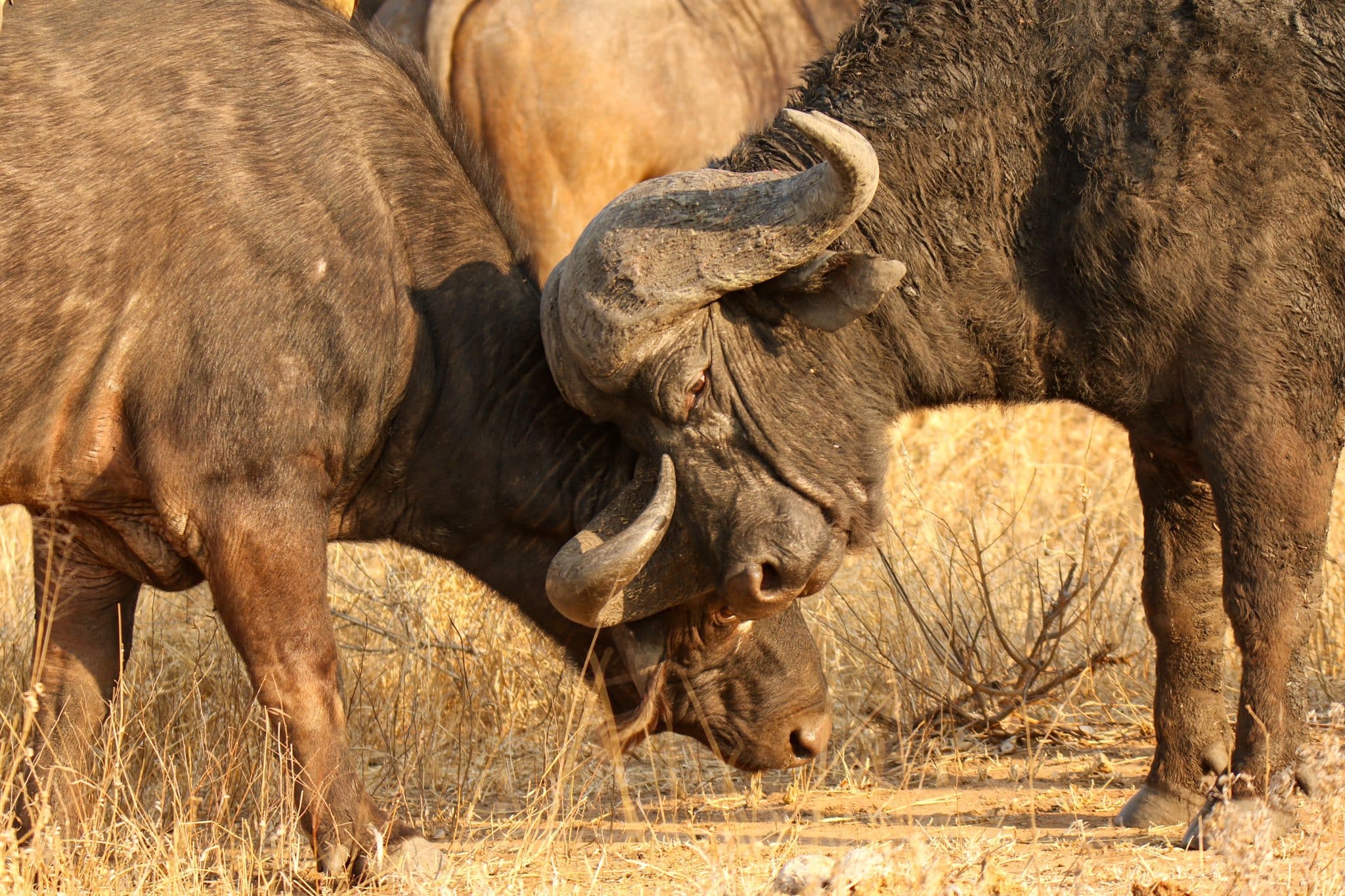
The majestic African Buffalo, scientifically classified as Syncerus caffer, is an extraordinary and remarkable creature that roams the diverse and captivating landscapes of Southern and Eastern Africa in formidable herds that can range from a modest 20 individuals to a staggering 1, 000. Thriving across a multitude of environments—ranging from semi-arid bush lands to expansive savannas and even lush lowland rain forests—these resilient animals are consistently found in proximity to essential water sources, which are crucial for their survival. Despite their imposing physical presence and robust build, African Buffalo have earned a notorious reputation as one of Africa’s most dangerous inhabitants due to their unpredictable nature and formidable strength. Contrary to popular belief among many who may conflate them with domesticated livestock, these buffalo share no familial ties with domestic cattle or bison. Their wild demeanour effectively precludes any possibility of successful domestication, setting them apart from their relatives such as the Asian water buffalo, which has been more amenable to human intervention. In the wilds of Africa, these remarkable creatures face few natural adversaries; only apex predators such as lions and crocodiles dare challenge them for dominance and sustenance. A particularly fascinating aspect of these highly social animals is the male dominance hierarchy that dictates breeding rights among bulls within each herd. This hierarchy plays a critical role in maintaining order during mating seasons and ensures that stronger males have priority access to females. Furthermore, African Buffalo exhibit extraordinary teamwork when it comes to defending one another against various threats; when stirred by distress signals emitted by fellow herd members, they have been known to collectively rally together in impressive displays of solidarity. In fact, there are documented instances where entire herds have banded together to repel—and even vanquish—lion predators intent on making them their prey. This cooperative behaviour not only underscores both their resilience but also highlights the intricate social structures that exist within herds, revealing much about their complex interactions and survival strategies in the untamed wilderness they inhabit.
Are you prepared to witness the iconic Big Five?
We invite you to embark on an unforgettable East African safari, where you will have an excellent opportunity to observe all of these magnificent animals in their natural habitat. The Big Five, comprising the lion, leopard, rhinoceros, elephant, and Cape buffalo, represent some of the most sought-after wildlife experiences for nature enthusiasts and adventure seekers alike. To ensure that your safari aligns perfectly with your desires and expectations, we encourage you to reach out to us. One of our knowledgeable tour consultants will work closely with you to craft a personalised itinerary that fulfils your dream of exploring the breathtaking landscapes and diverse ecosystems of East Africa. Don’t miss this chance to create lasting memories while immersing yourself in the rich wildlife heritage that this remarkable region has to offer.

Experience an unforgettable five-day safari to the breathtaking Lake Nakuru and renowned Masai Mara. This curated journey offers a chance to witness Africa’s “Big Five” wildlife—lions, leopards, elephants, buffaloes, and rhinoceroses—in their natural habitats. Traverse stunning savannahs and diverse ecosystems while immersing yourself in the rich flora and fauna. Each day promises thrilling adventures and memorable encounters in one of the world’s top wildlife destinations.

7 Days Nairobi, Amboseli, Lake Naivasha and Masai Mara Tour
Embark on a memorable seven-day tour through Kenya’s stunning landscapes, including Nairobi, Amboseli, Lake Naivasha, and Masai Mara. This journey offers a unique chance to see the Big Five—lions, leopards, elephants, buffaloes, and rhinoceroses—in their natural habitats while exploring each destination’s remarkable scenery. Experience the bustling life of Nairobi and the expansive savannahs of Amboseli with views of Mount Kilimanjaro. Engage with local communities to learn about their traditions and enjoy peaceful boat rides at Lake Naivasha while observing hippos and various bird species. The tour culminates in Masai Mara National Reserve, known for its extraordinary wildlife and dramatic landscapes. Participate in thrilling game drives at dawn or dusk to spot predators and prey or witness the Great Migration during certain seasons. This comprehensive experience highlights Kenya’s rich biodiversity along with its vibrant ecosystems and cultural heritage.

6 Days Ol Pejeta, Lake Nakuruand Masai Mara Safari
This unforgettable six-day safari itinerary, encompassing the renowned Ol Pejeta Conservancy, the stunning Lake Nakuru, and the iconic Masai Mara National Reserve, invites you to experience some of the most celebrated hotspots for Kenya’s diverse and vibrant wildlife. Throughout this expedition, you will have the extraordinary opportunity to observe and appreciate the majesty of Africa’s “Big Five” – lions, leopards, rhinoceroses, elephants, and Cape buffalos – in their natural habitats. Each destination on this carefully curated journey offers a distinct landscape and an array of wildlife encounters that are sure to leave a lasting impression on every traveler. From the expansive savannahs teeming with life in Masai Mara to the picturesque shores of Lake Nakuru adorned with flocks of flamingos, this safari promises an immersive experience into Kenya’s rich biodiversity.
 English
  Spanish
  Italian
  Russian
  Chinese
  German
  French