
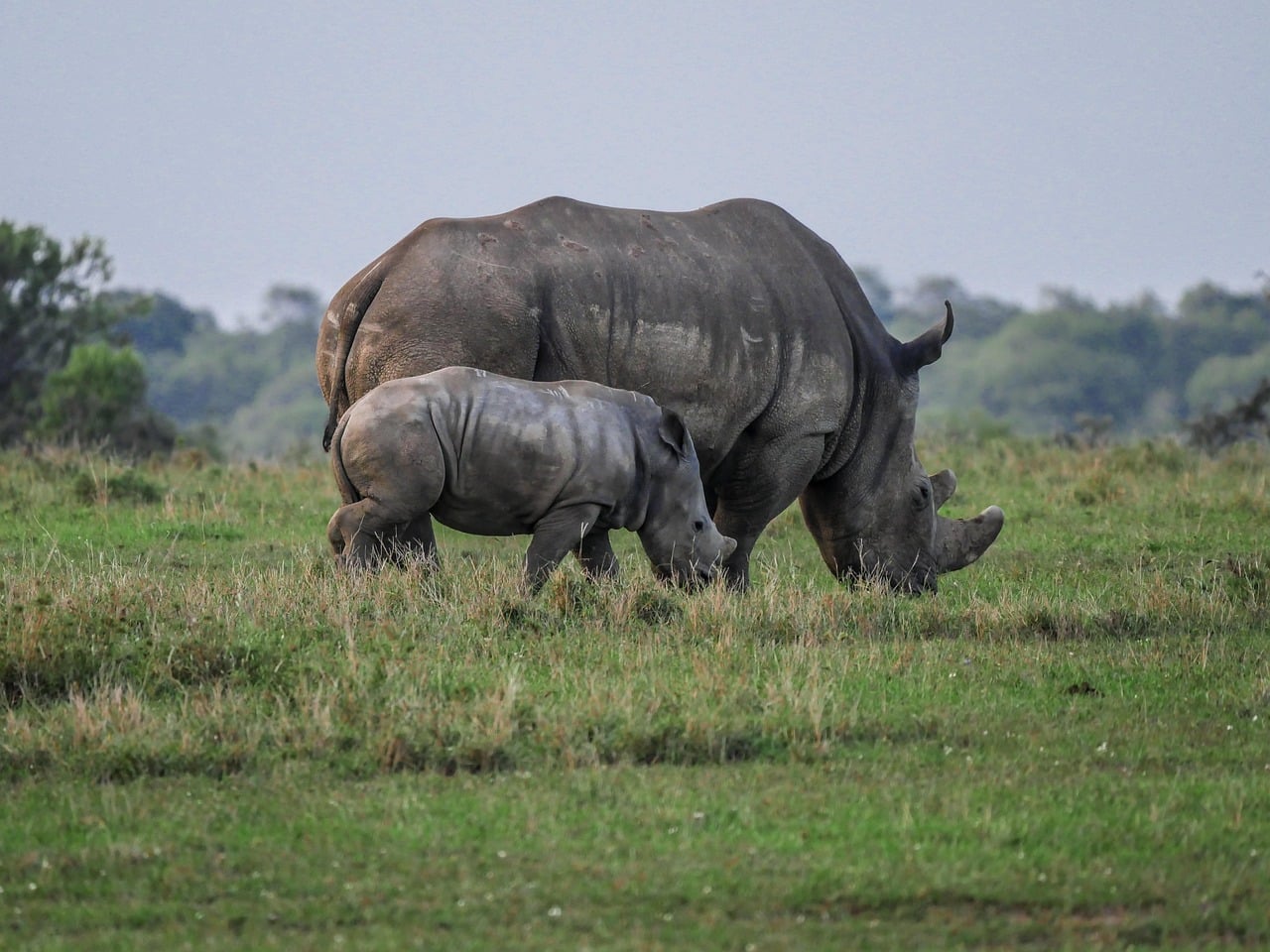
Rhinoceroses, commonly referred to as rhinos, hold the distinction of being the second largest terrestrial mammals on the planet, with only elephants surpassing them in terms of bulk and weight. Within the African continent, there exist two primary species of rhinoceros: the White Rhino and the Black Rhino. It is noteworthy that their names do not correspond to differences in skin color; rather, both species exhibit a grayish hue that belies their nomenclatural distinctions. Rhinos are celebrated members of what is famously known as the African Big Five—a term that encompasses five iconic species considered vital for wildlife tourism.
As herbivorous creatures, rhinoceroses primarily subsist on a varied diet consisting of vegetation such as fruits, twigs, stems, grasses, and leaves. This diverse diet underscores their role within their ecosystems as grazers and browsers. The reproductive cycle of rhinos is characterized by an extended gestation period lasting between 15 to 17 months—a duration that speaks to the significant investment these mammals make in nurturing their young. An intriguing aspect of rhinoceros anatomy is their dental structure; they lack front teeth entirely. Instead, they have evolved strong and flexible lips which they adeptly use to grasp and pluck foliage from shrubs or trees—a testament to nature’s ingenuity in adapting forms for survival.
In terms of natural predation threats, rhinos are largely insulated due to their formidable size; however, humans emerge as their most significant predators. Tragically motivated by pride, superstition, and sheer greed—qualities that often cloud our better judgment—human activities have precipitated a dramatic decline in rhino populations over the past century. The illegal trade associated with rhinoceros horns poses an existential threat to these magnificent animals. In certain regions of Asia, powdered horn has historically been regarded as a medicinal remedy or even as a status symbol reflecting wealth and power. The composition of rhino horns consists predominantly of keratin—the same fibrous protein found in human nails and hair—which grows from approximately one or two months after birth onward into its characteristic shape throughout a rhino’s life span. Beyond poaching pressures stemming from this illicit trade, habitat loss represents another critical challenge faced by rhinoceroses today. As human encroachment continues to expand into previously wild territories for agriculture or urban development purposes, suitable habitats for these majestic creatures diminish rapidly—compounding existing threats and pushing them closer towards potential extinction if proactive conservation efforts are not realized promptly.
Rhino Conservation in Kenya
Kenya is resolutely committed to the conservation of its iconic wildlife, particularly the rhinos and elephants that symbolize the nation’s rich biodiversity. The country has adopted a zero-tolerance policy towards the illegal ivory trade, a stance that has been vividly demonstrated through dramatic public displays, such as the burning of confiscated ivory at the prominent ivory burning site located within Nairobi National Park. This act not only signifies Kenya’s firm rejection of poaching and wildlife trafficking but also serves as a powerful message to both local communities and international audiences regarding its dedication to preserving these magnificent creatures. The commendable efforts of rangers who tirelessly protect these animals within Kenya’s national parks are instrumental in this conservation battle. Their vigilance, combined with support from local communities and private land conservancies, has contributed significantly to a reduction in the poaching rates of both rhinos and elephants. Enhanced levels of security have been complemented by stringent sentencing guidelines for wildlife crimes, which aim to deter potential offenders by imposing harsher penalties for those found guilty of engaging in activities that threaten wildlife. Moreover, community engagement initiatives have played an essential role in fostering awareness and promoting coexistence between humans and wildlife. These programs encourage local populations to participate actively in conservation efforts, thereby creating a sense of ownership and responsibility towards protecting their natural heritage. One notable example of Kenya’s commitment to rhino conservation is Ol Pejeta Conservancy, recognized as one of the largest rhinoceros sanctuaries worldwide. This vital refuge is home to Najin and Fatu—an extraordinary mother-daughter pair who hold the distinction of being the last living northern white rhinos on Earth. Their plight underscores not only the fragility of this subspecies but also highlights ongoing global efforts aimed at preventing further extinction events among vulnerable species. In addition to Ol Pejeta Conservancy, numerous other parks across Kenya serve as habitats for various rhinoceros species. Each location plays a critical role in supporting population recovery efforts while simultaneously attracting ecotourism that contributes financially to ongoing preservation endeavors. Through these comprehensive strategies involving law enforcement, community involvement, habitat preservation, and public education campaigns, Kenya continues its unwavering journey toward securing a sustainable future for its treasured rhinos.
Black Rhino

Black rhinos, scientifically known as Diceros bicornis, are notably smaller in size when compared to their more massive counterparts, the white rhino species. One of the distinguishing characteristics of black rhinos is their uniquely hooked upper lip, which is specifically adapted to facilitate feeding on a diverse range of vegetation. Unlike white rhinos that predominantly graze on grasses, black rhinos are classified as browsers; their pointed and flexible lips enable them to adeptly grasp and consume leaves from various bushes and trees that populate their natural habitat. In terms of physical attributes, black rhinos exhibit less pronounced humps on the backs of their necks and possess proportionally smaller heads than those seen in white rhinos. These anatomical differences contribute to the overall agility and adaptability of black rhinos within their environment. Furthermore, these remarkable creatures sport two distinct horns; however, there is a notable sexual dimorphism in horn shape between males and females. Male black rhinos typically have thicker horns that can be formidable in size, while female horns tend to be longer but thinner. When comparing the front horns between these two species, it becomes evident that black rhinos possess shorter front horns than white rhinos; however, it is noteworthy that the second horn found on a black rhino is generally slightly shorter than that seen in white rhinoceroses. Interestingly enough, despite common misconceptions regarding color differentiation between these two species based solely on their names—black and white—there exists no actual color distinction between them. Both types of rhinoceroses are predominantly dark grey in hue; however, this coloration can vary significantly based on local soil conditions. As these magnificent animals frequently engage in wallowing behavior—rolling in mud or dust for both cooling purposes and skin protection—their skin color may change accordingly due to environmental factors encountered within their habitats.
White Rhino

The white rhinoceros, scientifically known as Ceratotherium simum, is a remarkable species of grazers characterized by its distinctive wide, square upper lip. This unique adaptation enables the white rhino to effectively feed on grasses, which constitute a significant portion of its diet. Often referred to as the square-lipped rhinoceros, the white rhino is substantially larger than its counterpart, the black rhinoceros. In terms of physical attributes, the white rhino possesses a longer skull with a less pronounced forehead and a more prominent shoulder hump, contributing to its robust appearance. Additionally, when comparing their horns, it becomes evident that the white rhino typically features a longer front horn accompanied by a much shorter second horn. The ear structure of this species is also noteworthy; they are considerably smaller and exhibit a rounder shape than those of black rhinos. Contrary to what their names might suggest, there exists no discernible color difference between the white and black rhinoceroses; both species share an overall dark grey coloration that serves as excellent camouflage in their natural habitats. Within the classification of white rhinoceroses, two distinct subspecies can be identified: the Southern white rhinoceros and the Northern white rhinoceros. The Southern subspecies can be found in several protected parks across Kenya where conservation efforts are actively underway. In stark contrast stands the critically endangered Northern white rhinoceros; only two individuals remain on Earth today. These last surviving members inhabit Ol Pejeta Conservancy in Kenya—a harrowing testament to both human impact on wildlife populations and ongoing conservation challenges faced globally.
Safaris to Rhino sanctuaries

This three-day safari expedition takes participants to the renowned Ol Pejeta Conservancy, an esteemed wildlife reserve located in the heart of Kenya. Known for its remarkable conservation efforts and diverse wildlife, Ol Pejeta offers a unique opportunity to engage with some of Africa’s most fascinating species in their natural habitat. During this immersive journey, guests will experience guided game drives, educational talks about conservation initiatives, and the chance to observe rare animals such as the endangered rhino and vibrant herds of elephants. This adventure not only promises thrilling encounters with wildlife but also fosters a deeper understanding of ecological preservation efforts within this extraordinary landscape. View itinerary and cost.

The three-day safari at Lake Nakuru National Park offers an exceptional opportunity to immerse oneself in a sanctuary renowned for its rich biodiversity. This remarkable destination is particularly famous for providing visitors with the chance to observe the endangered rhinoceros in its natural habitat, alongside a myriad of other wildlife species. The park’s diverse ecosystem not only supports these majestic creatures but also hosts a variety of birds, including flamingos that grace its shores, and numerous mammals that roam freely throughout the expansive landscape. Engaging in this safari allows one to appreciate the intricate balance of nature while witnessing firsthand the conservation efforts aimed at protecting these vulnerable species. View itinerary and cost.
 English
  Spanish
  Italian
  Russian
  Chinese
  German
  French