
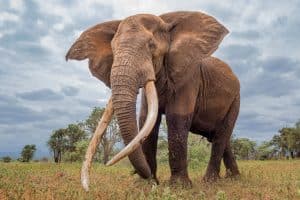
Craig, born around 1972, lived to the remarkable age of 54—a significant milestone for a wild African elephant. While African elephants can sometimes reach 60–70 years, and occasionally live up to 90, surviving to such an age in the wild is increasingly rare. Many elephants eventually succumb to starvation as their teeth wear down, leaving them unable to chew enough food to sustain themselves. As a proud member of Africa’s iconic “Big Five,” elephants hold a special place in wildlife tourism. Craig, however, became legendary not only for his impressive longevity but also for the grandeur of his tusks and the calm, gentle personality that endeared him to everyone fortunate enough to witness him.
The Super Tusker of Amboseli
Loved by tourists, filmmakers, and the local Maasai community, Craig was a true icon of Amboseli National Park. His enormous tusks, weighing over 45 kilograms each and measuring an astonishing 2.1 meters (almost 7 feet), nearly touched the ground, earning him the revered status of a “super tusker.” Such tusks are extraordinarily rare today, as decades of poaching have decimated elephant populations with these genetic traits. Craig’s survival, then, was not only a marvel of nature but a triumph for conservation.
A Gentle Giant with Global Fame
Craig’s fame went beyond his physical grandeur. Unlike many elephants of his size, he was remarkably calm and gentle. Visitors recall the dignity with which he moved through the park, seemingly unfazed by the presence of vehicles and cameras surrounding him. Photographers from around the world flocked to capture the golden light glinting off his magnificent tusks, immortalizing the gentle giant in images that spread far beyond Kenya.
Ambassador of Culture and Conservation
In 2021, Craig’s influence extended into popular culture when he became the ambassador for Kenya’s iconic Tusker beer. This partnership highlighted the symbolic value of wildlife in Kenya—not just as an economic and cultural asset but as a living emblem of national pride. Craig became a face of strength, resilience, and the enduring bond between humans and the natural world.
A Living Symbol of Conservation Success
Yet Craig’s significance was far deeper than fame or appearances. Living for more than half a century, he embodied a conservation victory in a continent where elephants have faced relentless threats from poaching. His life stood as a testament to the power of coordinated wildlife protection, local support, and a commitment to preserving Kenya’s rich biodiversity.
Farewell to a National Icon
In early January 2026, the wildlife community mourned as the Kenya Wildlife Service announced Craig’s passing due to natural causes. Old age and severe tooth wear had compromised his ability to grind food, ultimately leading to digestive failure. Conservation groups including the Amboseli Trust for Elephants and Big Life Foundation commemorated him as an international icon and a case study in biodiversity protection. To conservationists, Craig represented hope—a reminder that even “super tuskers,” once on the brink of extinction, could survive with protection. To Kenyans, he was a living symbol of national wealth and pride.
Craig’s Enduring Legacy
Craig’s peaceful passing marked the end of an era, but it did not end his influence. His legacy challenges both Kenyans and the global community to continue the fight against poaching, habitat loss, and climate change. The story of Craig reminds us that conservation is not only necessary but achievable, with patience, dedication, and respect for the natural world.
Though the grasslands of Amboseli may now feel quieter without his majestic presence, Craig lives on—in photographs, in stories, in policies inspired by his life, and in the hearts of everyone fortunate enough to witness the gentle stride of Kenya’s greatest tusker.
 English
  Spanish
  Italian
  Russian
  Chinese